

Understanding Your Investment Needs
Before embarking on the journey of selecting a stock broker, it is crucial to assess your individual investment needs and goals. Investors come in various forms, ranging from novices who are just starting to seasoned traders well-versed in the complexities of the market. This diversity necessitates a tailored approach when choosing a stock brokerage platform that aligns with one’s unique objectives.
First and foremost, identifying your investment objectives is essential. Are you focused on retirement savings, aiming for long-term wealth accumulation, or do you plan to engage in active trading? Each of these goals demands different strategies and may dictate the type of services required from a broker. For instance, those looking primarily at retirement might lean towards brokers offering Individual Retirement Accounts (IRAs) and other tax-advantaged accounts, while active traders may prefer platforms with lower transaction fees and advanced trading tools.
Account types play a pivotal role in broker selection as well. Understanding the difference between taxable accounts and retirement accounts is vital. Taxable accounts offer greater flexibility in terms of withdrawals and investment choices but may have tax implications on capital gains. Conversely, retirement accounts often come with specific rules about contributions and withdrawals, which can influence your investment timeline. Knowing these aspects can lead individuals to brokers that specialize in their desired account types, facilitating a smoother investment experience.
Moreover, recognizing your level of risk tolerance is integral to determining the right broker and the investment products that suit you best. Some investors may prefer conservative strategies, while others may be comfortable with higher levels of risk in pursuit of greater returns. Defining these personal specifics will significantly streamline the process of identifying a broker that meets your investment philosophy and needs.
Key Factors to Consider When Choosing a Broker
Choosing a stock broker is a pivotal decision for any investor, especially for beginners who may find the various options overwhelming. One of the primary considerations is the structure of fees and commissions associated with trading. Brokers may charge different fees for trades, account maintenance, and various service levels. It is essential to evaluate how these costs align with your trading frequency and overall investment strategy.
Another key factor is the variety of account types offered by a broker. Some may provide individual brokerage accounts, while others may offer retirement accounts like IRAs or custodial accounts for minors. Having the flexibility to choose between these options can significantly influence long-term investment plans.
Investors should also look into the available investment options. A broker that offers a broad range of assets—from stocks and Exchange-Traded Funds (ETFs) to mutual funds and bonds—will allow for diversified investment strategies. The more choices available, the better an investor can tailor their portfolio to meet their financial goals.
The usability of the trading platform is equally important as it directly impacts the trading experience. A user-friendly platform with accessible features can enhance decision-making and eliminate unnecessary obstacles. Consequently, beginners should assess features such as mobile accessibility, real-time data, and the presence of analytical tools.
Quality customer support cannot be overlooked. Timely assistance can be crucial during critical trading moments, so evaluating the responsiveness and availability of customer service—whether by phone, chat, or email—is advisable. Additionally, the inclusion of educational resources by the broker can empower investors with the knowledge necessary for making informed decisions.
Lastly, security features are paramount in protecting your investments. Consider how a broker safeguards your personal information and ensures the security of your transactions. A robust security framework contributes significantly to the overall trustworthiness of the broker. By assessing these factors, investors can make informed choices that align with their financial objectives and risk tolerance.
Comparing Popular U.S.-Based Stock Brokers
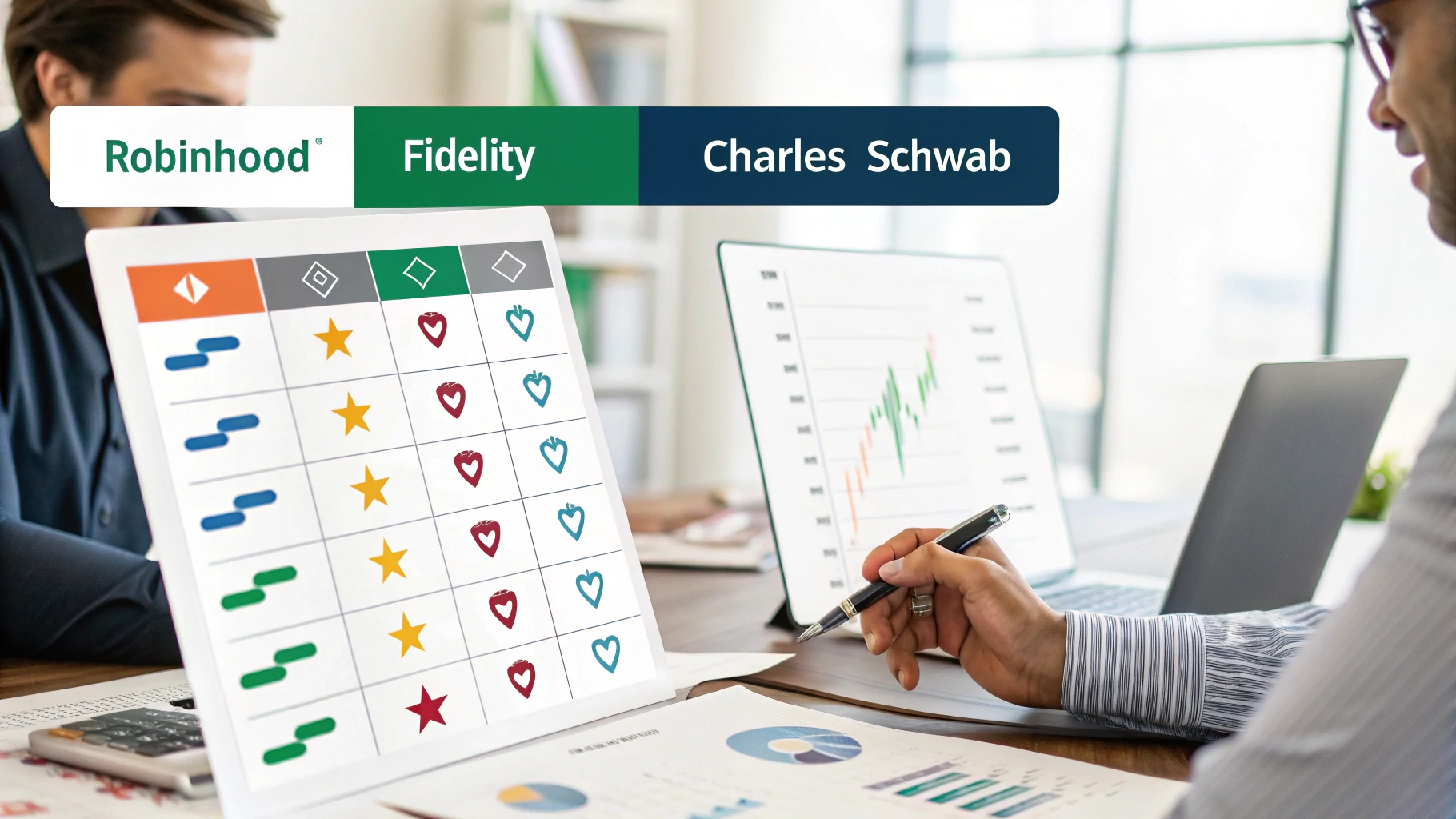
When selecting a stock broker, understanding the leading options available is crucial. In the U.S. market, several brokers consistently stand out for their services, trading fees, and user experience. This comparison focuses on five prominent platforms: Robinhood, Fidelity, Charles Schwab, ETRADE, and Webull, to assist beginners in making informed choices.
Robinhood is well-known for its commission-free trading, making it a popular choice among novice investors. It offers a user-friendly mobile app that simplifies stock trading. However, its limited customer support and lack of advanced trading tools can be drawbacks for more seasoned traders.
Fidelity is another significant player, often praised for its research and educational resources. It provides a robust trading platform with various investment options, including stocks, ETFs, and mutual funds. Fidelity does have a more comprehensive fee structure, which may include charges for certain services, making it essential for potential users to evaluate their specific investment needs.
Charles Schwab offers a balanced range of services, combining an intuitive online platform and strong customer service. Their commission-free trades and extensive research tools cater to both beginners and experienced investors. However, some users find that the platform can be overwhelming due to the vast number of features available.
E*TRADE is prominent for its powerful trading tools, especially for active traders, providing access to in-depth analytical resources. It supports a diverse range of securities but comes with a slightly higher commission structure compared to its competitors. This platform may be more suited for those with intermediate experience.
Lastly, Webull presents a modern approach with commission-free trading, advanced charting tools, and analytics, attracting a tech-savvy demographic. However, it may lack the extensive educational resources offered by some of its competitors, which could pose challenges for absolute beginners.
When comparing these popular U.S.-based stock brokers, it is vital to consider personal investment preferences, trading experience, and specific financial goals to determine which platform will best suit individual needs.
Final Tips for Choosing the Right Broker
When navigating the often complex process of selecting a stock broker, aspiring investors should consider several practical tips that can make a significant difference in their experience. First and foremost, utilizing demo accounts is a wise strategy. Many brokers offer these accounts to allow potential clients to practice trading without any financial risk. This feature enables users to familiarize themselves with the trading platform’s functionalities, responses to market movements, and various tools available, thus aiding them in making informed decisions. By experimenting with different features in a simulated environment, investors can determine which broker aligns best with their trading preferences.
Additionally, reading customer reviews can provide invaluable insights into a broker’s credibility and service quality. Prospective users should seek platforms that are consistently praised for their user support, reliability, and overall customer satisfaction. Social media forums, investment communities, and brokerage comparison sites often host discussions where existing clients share their experiences. This feedback can reveal common issues or exceptional services that might not be apparent at first glance.
Moreover, evaluating the educational resources a broker offers is crucial. For beginners, robust educational tools can be instrumental in enhancing their understanding of stock trading. Brokers that provide webinars, tutorials, articles, and market analysis can help investors build their skills and adapt to the ever-changing financial landscape. This aspect becomes particularly significant as trading strategies can evolve over time, necessitating ongoing education.
Lastly, it is essential for investors to continually evaluate their chosen brokerage. As personal goals and market conditions change, the original choice may no longer meet one’s investing needs. Regular assessments can ensure that the broker remains suitable and responsive to an investor’s evolving financial objectives.